
Custom logo shirts can make a business easier to recognize at events, in customer-facing roles, and across a distributed team. The strongest results come from a clear design system and a practical plan for who will wear the shirts.
Where logo shirts help most
- Trade shows, pop-ups, and community events.
- Staff uniforms for customer-facing teams.
- Company retreats, volunteer days, and team celebrations.
- Client gifts or partner kits when the design fits the relationship.
Make the logo readable
Use a high-resolution logo and leave enough contrast around it. A small mark can get lost inside a busy print, so decide whether the logo should be the focal point or a quieter detail. Review a digital proof before approving production.
Choose a shirt people will wear again
Comfort and fit affect whether apparel becomes a useful brand touchpoint or stays in a drawer. Offer a clear size chart, choose fabric for the event climate, and keep the print aligned with the team’s style.
Plan the order
Collect sizes early, set a design approval deadline, and separate production time from shipping time. For recurring team apparel, record the color, logo version, and placement so later reorders stay consistent.
Measure the purpose
Define what success looks like: easier staff identification, a unified event look, more social photos, or a stronger client welcome. The goal should shape the design and quantity.
For event-specific planning, see custom Hawaiian shirts for corporate events. For supplier selection, read how to choose a manufacturer.
Check out our Corporate Hawaiian Shirts
Decide what the logo shirt should achieve
A custom logo shirt is most useful when it supports a specific marketing or operational goal. It can help customers recognize a team at an event, give employees a consistent appearance, make a brand easier to spot in photos, thank loyal customers, or create a piece of merchandise that people choose to wear. “Get more exposure” is too broad on its own; define the audience, setting, and action you hope the shirt supports.
For example, a hospitality team may need easy identification, while a small business at a community fair may need a memorable visual that starts conversations. A client-gift shirt needs a design that feels desirable enough to wear after the gift moment. Each goal leads to a different design choice.
Design for recognition, not just logo placement
Putting a logo as large as possible on a shirt does not always make it more effective. A readable mark, a limited color palette, and a pattern that fits the brand can be more memorable than a crowded design. Think about viewing distance: can someone recognize the brand in a photo, across a booth, or while a team member is moving? Then consider wearability: would the person wearing it feel comfortable using it outside the event?
| Goal | Useful design approach |
|---|---|
| Staff identification | Clear contrast, consistent color, logo visible at normal distance |
| Event giveaway | Wearable pattern with a subtle, memorable brand connection |
| Social or photo moment | Distinctive color and composition that remains recognizable in images |
| Merchandise | Design-led shirt that customers want even without an event context |
Choose the right audience and moment
Logo apparel works best when the recipient has a reason to wear it. A staff shirt may be worn at every shift; a conference shirt may be worn during an event; a gift may be worn on a trip or at a reunion. Map the shirt to a real moment and create supporting messaging around it. A photo, a short story, or an invitation to share an event image can make the item part of a larger brand experience.
Do not assume every recipient wants a loud advertisement. When the design is useful, attractive, and relevant, the brand can become visible through genuine use rather than forced promotion.
Use custom Hawaiian shirts for the right brand story
A tropical or aloha-style pattern can suit a summer promotion, resort setting, travel-related brand, restaurant event, or a team celebration. It should fit the brand’s own story rather than borrowing Hawaiian imagery carelessly. Avoid language or visuals that reduce Hawaiian culture to a generic party theme. If the project has no real Hawaiian connection, a custom pattern inspired by the company’s own colors, products, or local setting may be more honest and effective.
Plan artwork and production carefully
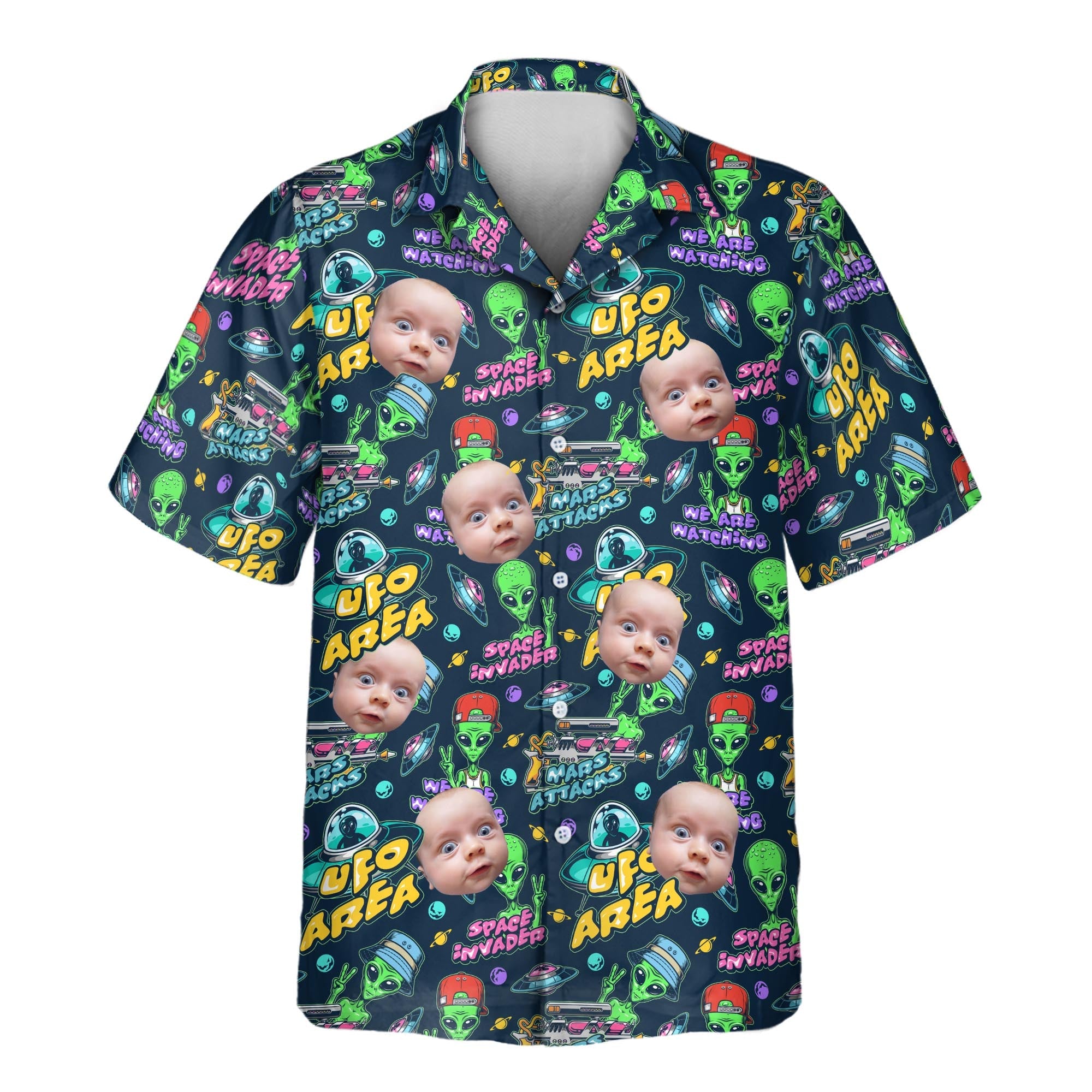
Use a high-quality logo file and request a proof that shows the complete garment. Check color contrast, logo placement, scale, spelling, and how the print falls around buttons and seams. For a photo-based or all-over design, prepare the artwork with our personalized shirt design guide.
Separate proof approval, production, and shipping in your timeline. For a date-specific event, the shirt must arrive early enough to inspect, sort, and replace an error if needed. Our manufacturer checklist covers the questions to ask before ordering.
Measure whether the shirts helped
Choose a measurable signal before the event. It could be staff recognition feedback, event photo use, QR-code scans, merchandise sell-through, social shares, returning customers, or a post-event survey. A logo shirt is one touchpoint, not a complete marketing plan; measure it alongside the event, offer, or customer experience that gives it meaning.
Common mistakes
- Using a low-resolution logo or unreadable small type.
- Forcing too many messages into one print.
- Choosing a design that employees or customers would not willingly wear.
- Ordering too late for proofing and production.
- Making cultural claims that the brand cannot support.
Frequently asked questions
Do logo shirts really help promote a business?
They can support recognition and conversation when they are tied to a relevant audience, event, or customer experience. They are more effective as part of a clear marketing plan than as a standalone giveaway.
How large should a logo be?
Large enough to be readable in the intended setting, but not so large that the shirt becomes uncomfortable or unwearable. Review the full-garment proof rather than judging the logo file alone.
Should I give logo shirts away or sell them?
That depends on the purpose. Gifts can reward loyalty or support an event; a design-led shirt may be sold as merchandise when customers see it as something they want to wear.
Key takeaway
Custom logo shirts work best when the design is readable, the fit is wearable, and the order supports a specific business use case.
Tags:
Previous
How to Design Your Own Personalized Hawaiian Shirt?
Next
Can I Wear a Hawaiian Shirt Golfing?
Related articles
-
Sep 25 2026
15 Best Hawaiian Shirt Brands to Know in 2026
-
Jul 25 2026